New Japanese Canadian online history resource
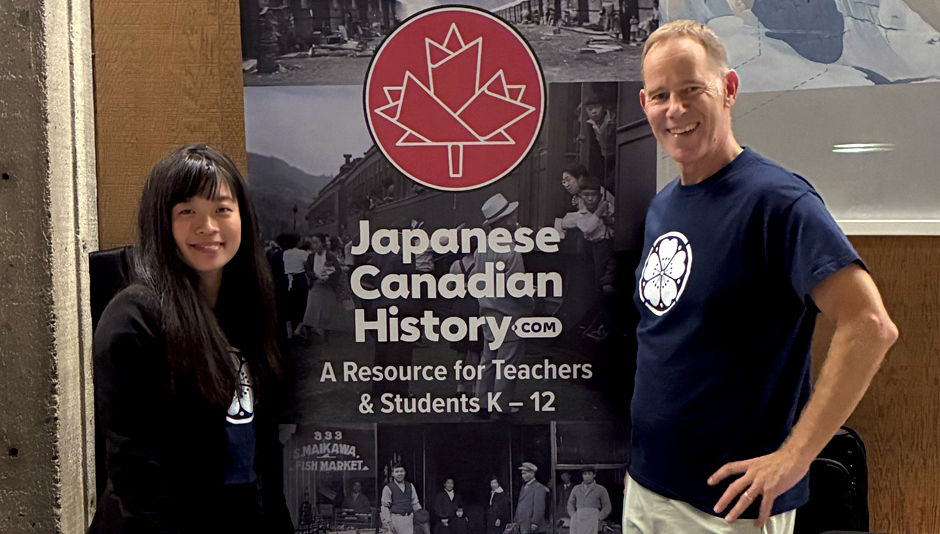
By the Japanese Canadian Legacies Society
“Our history shows the fragility of democracy. It’s important to our community that this story is told, that students in the public education system learn what happened, so that these historic injustices are never repeated. In updating the BC curriculum and supporting learning resources aimed at teachers and students, we are making sure that they have the necessary tools and teaching materials to bring this history to life.” – Susanne Tabata, JCLS founding president and CEO
How do you break down barriers to teaching and learning about Japanese Canadian history?
That’s a question that a new online resource for teachers and students, from Kindergarten to Grade 12, strives to answer.
Decades of discriminatory government policies led to many historical injustices that targeted people of Japanese descent before, during, and after the Second World War. Despite the fact many of these individuals were Canadians, people of all ages, including children, experienced forced removal, displacement, incarceration, and dispossession.
Yet this history has remained largely untold.
Japanese Canadian Legacies Society (JCLS), established in June 2022, was set up to implement programs that honour the legacies of Japanese Canadians in BC and across Canada.
On May 21, 2022, former BC Premier John Horgan acknowledged the historical wrongs that affected Japanese Canadians during the 1940s. He pledged to support a framework called BC Redress. The project, proposed by the National Association of Japanese Canadians, was led by Susanne Tabata, who later became JCLS’s founding president and CEO.
One of the key programs in the project was education. A committee was formed that assembled a group of 17 BC-based K–12 teachers to create education resources. Educator Mike Perry-Whittingham led the cohort that created the first iteration of the digital learning portal: www.JapaneseCanadianHistory.com.
The newly updated version of the site launched on October 24, 2025, at three provincial specialist association conferences in Metro Vancouver. The unique website is filled with an extensive selection of educational materials and useful resources developed by teachers for teachers. The content has been curated with an effort to meaningfully engage with this part of Canadian history.

Because the website was created and vetted by teachers, it resonated with conference participants, said Makiko Johnston, who attended the Provincial Intermediate and Middle Years Teachers’ Association (myPITA) conference to share the website. “Many on our team are Japanese Canadian, which made the materials feel authentic, trustworthy, and meaningful.”
Makiko gave out copies of Full Moon Lagoon by Monica Nawrocki, which she uses with young learners. The book connects readers to Japanese Canadian history using empowered characters and provides opportunities to discuss racist language.
The team at the BC Teacher-Librarians’ Association (BCTLA) conference handed out information and copies of Obaasan’s Boots. The book, co-written by teacher-librarian Janis Bridger and her cousin Lara Okihiro, was featured in Teacher (Nov/Dec 2025).

At the BC Social Studies Teachers’ Association (BCSSTA) conference, Mike facilitated an engaging online workshop about the website and answered many questions about the handouts and functionality.
The new website offers an easy-to-navigate platform with a variety of lesson plans to suit grade and class interests.
Ready-made lesson plans focus on the internment of Japanese Canadians and introduce students to topics such as discrimination, resistance, and protest. Select handouts are available in French. Plus, an archive, reference library, and links to credible sources make it easy to delve into specific areas for further study.
If you’re new to teaching history, haven’t covered this material before, or want to learn more about the subject matter, an introductory teacher course is intended to provide a basic history of Japanese Canadians from their first arrival in the 1870s to modern day. The course is divided into three self-paced learning modules.
The website “will allow people to enhance their existing units or build the confidence they need to teach about Japanese Canadian history for the first time,” said teacher Larissa Kondo.
The website also offers sports connections to provide a relatable segue into issues of racism and geography. For example, if you and your class were captivated by the World Series and the Japanese players, the site features a lesson plan that introduces the Asahi baseball team and its roots in the Powell Street area of Vancouver.
If you’re interested in teaching about resistance in the face of injustice, one lesson plan examines how Japanese Canadians resisted racist and oppressive policies enacted by the federal government during the 1940s. Another explores the impact of internment on students through the lens of Japanese Canadian high school graduates.
With different ways to engage students using thought-provoking activities, there’s much to discover in this educational website. For more information, email education@jclegacies.com.
